

I am currently in the fifth year of my postdoctoral journey. This is the stage at which my independent research profile should become clearly visible. On a more operational level, I should be working towards securing funding for research which strengthens my candidacy for Professorship. When the time came to write my grant proposal, I reflected on my academic trajectory. Having done research in multiple fields, I could not help but wonder if this diverse background could work against me. Securing funding is a highly crucial step. However, funding institutions are primarily organized by discipline, meaning the focus of my proposal had to align closely with a specific field. Because the academic system often expects a linear trajectory, I found it challenging to specify the target field, and to perceive and describe my diverse research profile as an asset rather than a liability.
A primary concern of mine was that review committees might expect a traditional background in a single discipline and view my past degrees as unrelated to my current research. I completed a Bachelor's degree in Physics engineering and a Master's degree in Mechanical engineering. During my Master's, however, a desire emerged to switch my focus from non-living to living systems, hoping to conduct research with a direct impact on society. Acting on this, I joined the physics department at Hong Kong Baptist University to pursue a PhD in Imaging Neuroscience, studying how brain structures and functions explain individual differences in behavior. It was a massive leap from engineering, but it sparked a deep interest of mine in the field. I dedicated substantial time to mastering human neurobiology, working rigorously to bridge the gap in my domain knowledge. Yet, despite this intense self-education, the absence of formal certification in the subject remained a quiet worry. To tackle this directly, I decided to challenge myself after my PhD by transitioning to a psychology department for my postdoctoral training to work more rigorously in this domain to gain mastery.
When I sat down to draft the grant, I realized that I did not fit into the standard evaluation categories. As a result,I genuinely felt regret about the decisions of my winding career path. If I wanted to build a career in Imaging Neuroscience, why didn't I just start there in the first place? My diverse background felt less like a strength and more like a disadvantage. However, as I worked through the puzzle of crafting the proposal, I realized that I was looking at the problem the wrong way. I stopped trying to force my profile into a single discipline and reflected on what my varied training actually provided. Experiencing how different fields address their research problems showed me the value of this variability. This variability is an asset; it is the exact mechanism that allows science to learn from itself. I recognized that, as interdisciplinary researchers, we shouldn't sacrifice our accumulated knowledge just to fit into one specific field. Instead, we can use that broad knowledge to gain a different perspective on complex challenges.
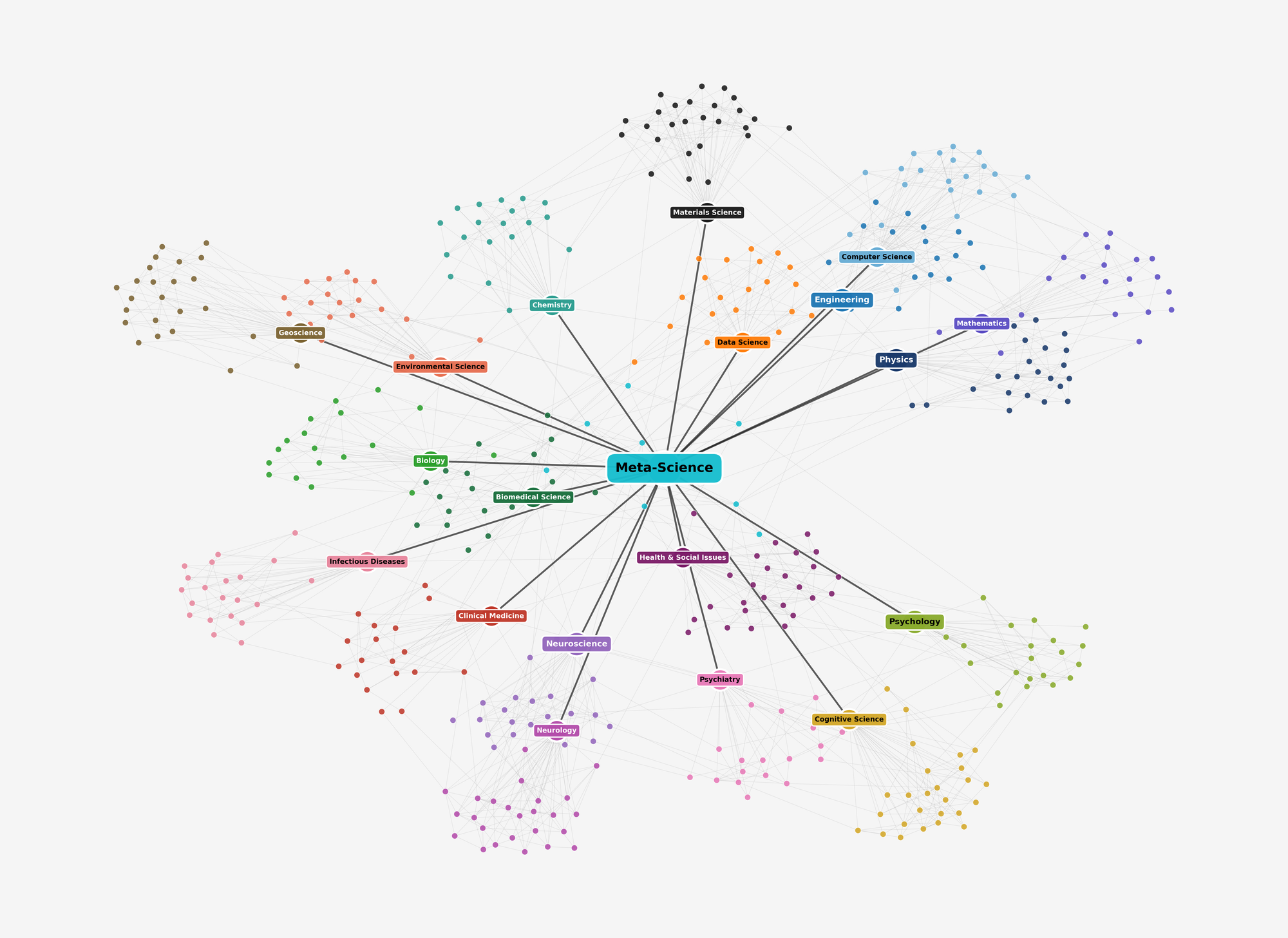
This brought me to meta-science,“the science of science”. It goes beyond just producing new findings to systematically study the research process itself. Instead of only asking what we discovered, it asks how we discovered it. It examines everything from our analytical tools to our everyday research practices. By improving these foundational elements, we ensure that our scientific discoveries are actually reliable.
To illustrate this framework in action, my current research combines my past training to ensure the methods we use to understand the relationship between brain and behavior yield robust and reliable results. To achieve this, I developed a unified approach drawing upon my past experiences. From engineering, I learned that identifying optimal data pipelines requires systematically testing and comparing diverse methods. From Physics, I learned to look beyond final outputs and rigorously interrogate the fundamental rules and assumptions driving those methods. Finally, from my postdoctoral training in psychology and neuroscience, I learned that any mathematical tool used to study the human brain and behavior must strictly adhere to underlying biological and psychological realities.
By integrating these three pillars, I effectively turned my diverse background into a practical research strategy. I now apply this meta-science approach to neuroimaging tools, specifically for Magnetic Resonance Imaging (MRI). Every person's brain is organized differently. For example, some individuals have larger or differently shaped functional areas than others. My aim is to rigorously validate and benchmark the methods we currently use to identify this individual-specific brain organization. By evaluating what is already available, I can help address major challenges in the field and guide future method development to be highly targeted and biologically constrained. If it were not for my realization about meta-science, I likely would have just developed yet another isolated algorithm, without stopping to research how the existing tools actually perform.
While this specific meta-science framework applies directly to my own research, it reflects a broader systemic pattern in academia. This underlying strategy works for any early career researcher with a diverse background, since we have the distinct advantage of knowing how different disciplines operate. Rather than viewing a diversified past as a disjointed list of projects, researchers might look for the methodological threads that connect them. By isolating the core problem-solving skills each discipline taught us, we can combine them to address a bottleneck in our current field. Furthermore, scientists with diverse backgrounds can act as vital bridges across university departments. For instance, we can integrate advanced computational tools from engineering into the psychology department, while ensuring that engineers incorporate real biological constraints into their models, fostering cross-departmental collaborations that strict single-discipline researchers might miss. Instead of obscuring our past degrees or trying to mold ourselves into a traditional profile, we must recognize that our strength lies in connecting these disparate pieces.
The academic system is beginning to recognize this value, but both funding bodies and universities need to fully appreciate the meta-scientific approach driven by interdisciplinary researchers. Currently, interdisciplinary applicants are frequently evaluated by discipline-specific panels that may not possess the necessary frameworks to assess cross-domain work (read this Nature study for a breakdown of why interdisciplinary research consistently faces lower funding success). Furthermore, standard evaluation criteria tend to prioritize high-volume, linear publication trajectories. Because methodological or cross-disciplinary contributions take longer to develop and are harder to categorize, they are often systemically disadvantaged. Yet, these contributions are the foundation of research; many scientists rely on these shared methods, tools, and databases to conduct their own work (in fact, if you look at the most-cited research in history, it is dominated by methods papers). Notably, the solution isn't to isolate us into separate meta-science units. Instead, institutions should ensure that professorships and grants within established fields actively welcome the unique problem-solving potential of interdisciplinary candidates. By connecting disparate areas of science, we provide concrete, methodologically sound solutions that a strict, single-discipline approach might overlook. By adopting more flexible grant criteria and embracing varied career paths within existing departments, the academic system would empower us to fully apply these integrated solutions to the field's most complex challenges.
I now view my non-linear trajectory not as a source of regret, but as an essential catalyst for developing a meta-scientific solution for research advancement. As an interdisciplinary researcher, I took a winding path simply because I am deeply committed to answering complex scientific questions. Ultimately, this intrinsic drive is what matters most. A diverse career profile is more than just a personal journey. Today I am convinced: Interdisciplinary researchers do not just exist on the periphery of established fields; we are fundamentally necessary. By leveraging our broad methodological expertise, we are uniquely equipped to solve the bottlenecks that isolated disciplines cannot fix on their own, strengthening the entire foundation of modern multidisciplinary science.
Daniel Kristanto is an interdisciplinary postdoctoral researcher in the Psychological Methods and Statistics lab at the Carl von Ossietzky Universität Oldenburg. He applies a meta-science framework to rigorously validate and develop methods for personalized neuroimaging. You can connect with him and learn more about his work at his personal website.
Image by Daniel Kristanto.