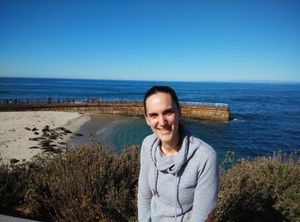

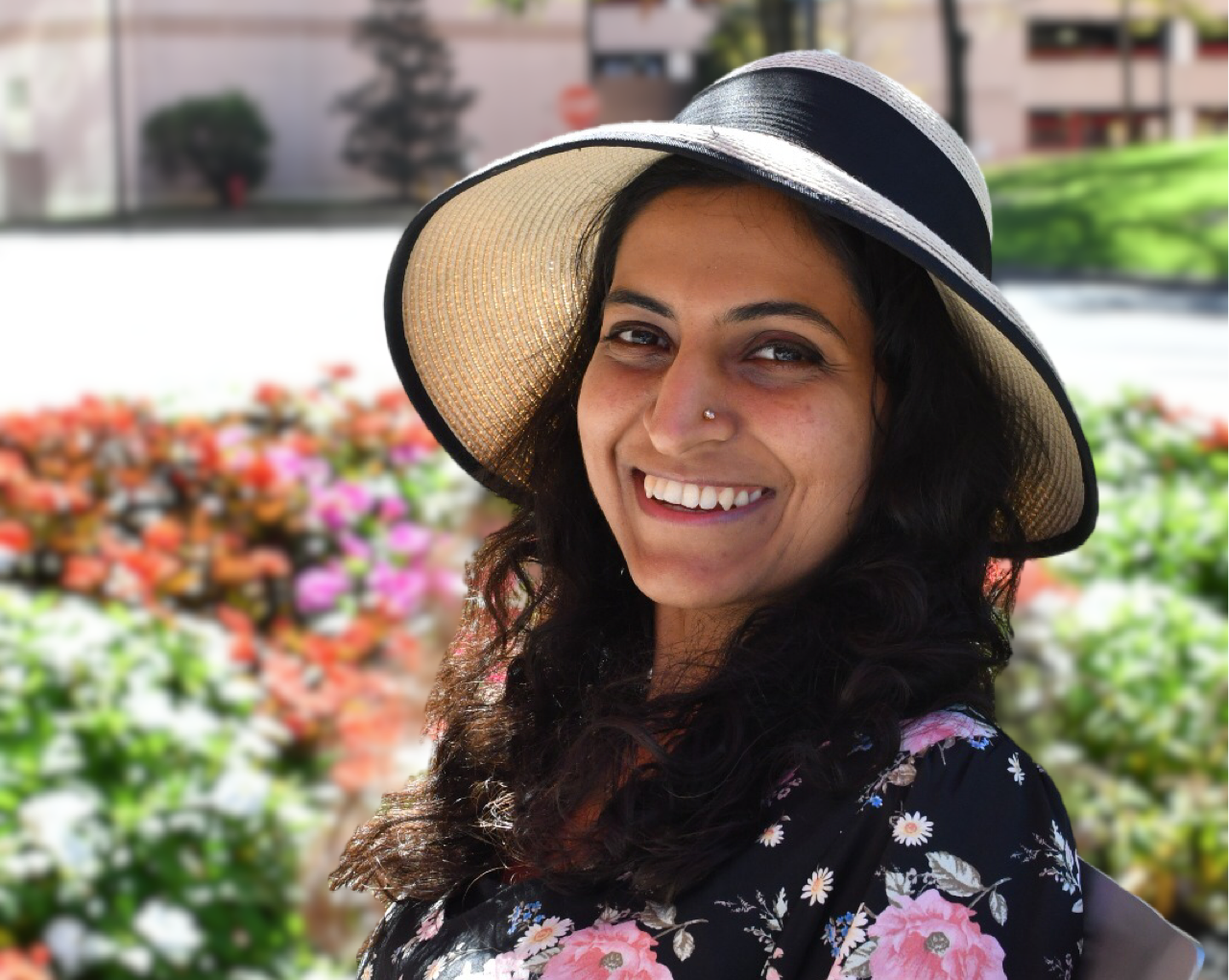
We are stoked to introduce our newest editor at ecrLife: Karishma Gangwani! She previously worked on the development of knowledge tools and translation as a Research Scientist at St. Jude Children’s Research Hospital. One of her greatest strengths is her ability to bring a deeply human-centered perspective to scientific communication. She thinks carefully about audience, context, and emotional resonance while helping authors shape and refine their narratives. At the same time, she can move fluidly between detail-oriented editing and broader systems-level thinking - helping authors not only clarify their stories, but also understand how their experiences connect to larger conversations within science, academia, and society. Her approach consistently brings forward the value, relevance, and positioning of a story in a way that feels both intellectually rigorous and emotionally grounded.
When she’s not working, she spends time with family and friends or enjoys nature hikes, painting, and her musical pursuits, from the flute to the veena!
In a few sentences, could you introduce yourself, tell us where you are (both geographically and along your career path?) and what you study?
Karishma Gangwani (KG): I’m a PhD biologist currently based in India, although my academic and professional journey has taken me across both India and the United States. My background is in biotechnology and cancer biology, and over time, my work has expanded into data science, visualization and science communication, systems thinking, patient-centered research, and public engagement. I previously worked as a Research Scientist at St. Jude Children’s Research Hospital, supporting diverse stakeholders in understanding data from pediatric cancer patients. I collaborated with oncologists and software developers to build tools integrating clinical and psychosocial data, particularly around survivorship and patient-reported outcomes. Alongside that work, I was involved in donor reporting, program development, STEM education, and communicating impact narratives to different stakeholders. Today, alongside my editorial work at ecrLife, I am also exploring how biology, education, policy, and communication intersect through my interests in corporate social responsibility, environmental social governance, and fundraising in non-profits.
What do you enjoy the most about being a scientist?
(KG): What I enjoy most about being a scientist is learning how interconnected everything is. At first, I was fascinated by molecular biology and cancer signaling. Over time, I became increasingly interested in how biology intersects with psychology, behavior, education, and social systems. Science teaches you to think critically, sit with uncertainty, and continuously revise your understanding of the world. I enjoy the process of asking questions, interpreting patterns, and connecting seemingly unrelated ideas into a broader framework.
What do you see as your key challenge as a scientist? OR what is the greatest scientific challenge you have overcome so far?
(KG): One of the biggest challenges I have faced has been learning how to navigate uncertainty beyond the laboratory itself. Scientific training prepares us to think rigorously, but not always to deal with failure, instability, migration, emotionally difficult work, or changing career identities. Working with children with cancer especially changed my understanding of what scientific impact really means. It pushed me to think beyond publications and data toward communication, quality of life, education, and long-term human outcomes.
What is the main change that you would like to see in the scientific community?
(KG): I would like to see more openness around the human realities of academia and research. There is still a tendency to present scientific careers as linear and hyperproductive, while conversations around burnout, mental health, caregiving, displacement, and uncertainty often remain hidden. I would also like to see stronger integration between science and public communication. Scientific knowledge becomes much more meaningful when it is accessible, contextualized, and connected to people’s lived experiences.
What motivates you to communicate science?
(KG): What motivates me to communicate science is the belief that science and systems are ultimately about people. Some of the most important scientific questions today, whether in healthcare, education, climate, or technology, require public understanding and trust. I am especially interested in communicating the human side of science: survivorship, development, behavior, inequality, systems, and how scientific ideas shape everyday life.
Outside of my editorial work, I also write on my Substack, where I publish essays on science, academia, psychology, STEM education, systems thinking, and lived experiences within research and society. Many of my essays explore the intersection of biology and society, using storytelling and personal reflections to make complex scientific and social ideas more accessible and comprehensible.
Bonus: What is your favorite thing about ecrLife?
(KG): One of my favorite things about ecrLife is that it creates a space for conversations that are often overlooked in traditional scientific environments. I appreciate that it allows early-career researchers to discuss not only science itself, but also the emotional, social, and structural realities surrounding academic life. It is one of the few spaces where science and lived experience can co-exist openly, without judgment or guilt.