
When I started my PhD in chronic obstructive pulmonary disease (COPD) immunology, I thought I understood inflammation. Like many early-career researchers, I approached it with a mindset of: in disease, inflammation is simply increased. When cells are stimulated with pro-inflammatory mediators, you expect an inflammatory response. Accordingly, when you block a pathway which contributes to inflammation you anticipate a drop in output. This is the logical and predictable thought process. However, when I began my work with airway epithelial cells, that view was quickly challenged and subsequently led to one of the most important (and unexpected) lessons of my PhD.
I realised early on that experiments didn’t always behave the way I expected them to. For example, cells from COPD patients didn’t simply behave “more inflamed” than controls. At first, I assumed I had done something wrong, so I repeated experiments, checked protocols and questioned everything from reagent quality to incubation times. You can’t escape the gnawing frustration and uncertainty that comes at this stage. You start to question everything - your technique, your understanding, even whether you’re interpreting the data correctly. It’s difficult not to compare yourself to others and wonder if they’re getting clearer results, or if you’re simply missing something obvious. This is where confidence can take a hit as progress feels slow and somewhat disappointing.
What makes this uncertainty particularly challenging to deal with is that there isn’t always a clear resolution. Throughout our education, we are taught to answer exam questions which always have a clear right answer, but research is different. In research, we are often left feeling unsatisfied when the right answer is not immediately clear. You can spend days or even weeks trying to understand confusing results only to realise that the answer may not make sense on its own - or that there may not even be a single, definitive explanation.
Learning to tolerate a lack of certainty has been one of the most difficult, yet important skills I’ve developed. Even with repeated experiments and changes to protocols, it became clear that no matter the conditions, the inconsistencies in my data persisted. Over time, I realised that the issue wasn’t technical error, but rather my assumptions. I had been thinking about inflammation as something straightforward, but in reality it is much more complex. I soon realised that the same stimuli can result in different inflammatory outputs depending on cellular context. I’d love to say this shift in mindset happened overnight and I was able to continue my research with this new insight. Instead, it came gradually, through repeated moments of confusion, doubt, and re-evaluation. Although those moments were uncomfortable, they were also where the most meaningful learning happened.
This shift in thinking also changed how I approached experimental design and decision-making. Throughout my PhD, I became more comfortable making decisions about when to move forward with the project instead of getting stuck trying to understand every inconsistency. This required a level of judgement that I hadn’t developed at the start of my journey. It was this that would eventually make me a more independent researcher.
These experiences have drastically changed how I approach experiments. Instead of asking, “Did this work as expected?”, I often find myself asking, “What is this result, under these specific conditions, trying to tell me?” It’s also changed how I think about diseases like COPD and how I present data. When I started my PhD, I felt a strong pressure to present results in a way that appeared clear, consistent, and aligned with an expected narrative, as though the value of the work depended on how neatly it fit a hypothesis. Looking back, I realise that while this instinct is common, it can limit how much you actually learn from your data. Not all results need to fit into a simple conclusion to be meaningful. In many cases, variability is not a problem to eliminate, but features that require careful analysis and understanding. It may be that these results don’t show us anything significant on their own but when viewed as part of a bigger picture, they can contribute something valuable. For example, variation in the data might reflect patient heterogeneity. As a result, I’ve become more deliberate in how I analyse results, especially when they don’t align with expectations. Now when I present my findings, I place more emphasis on context rather than focusing on definitive conclusions. While this approach can feel less satisfying, it allows me to be more critical with my work, and to recognise the importance of acknowledging complexity rather than reducing it.
As time went on, I began to see that research isn’t just about generating results - it’s also about learning how to interpret uncertainty. It’s about recognising when a model you’ve been working with for months is simply not the best fit for your research, and that the use of more physiologically relevant material might work better. Having the confidence to move on to better experimental designs is something most people don’t have at the beginning of their journey, but develop over time. Some of the most valuable insights in science don’t come from results that confirm expectations, but from those that force you to rethink them completely.
For early-career researchers, this can be a difficult adjustment as we’re trained to look for clear patterns and definitive answers. But in reality, much of science exists in the grey area in between. If there’s one thing I’ve learned so far, it’s that being wrong or not knowing is not a failure. It’s simply part of the process. This shift in mindset doesn’t just apply to a single project, it shapes how you approach science more broadly. Not having all the answers allows us to ask more questions and keep learning, which is exactly what makes research worth doing.
Jennifer Loudon Moxen is a PhD researcher studying COPD immunology. She is passionate about translating complex scientific concepts into accessible and engaging content. Connect with Jennifer on LinkedIn.
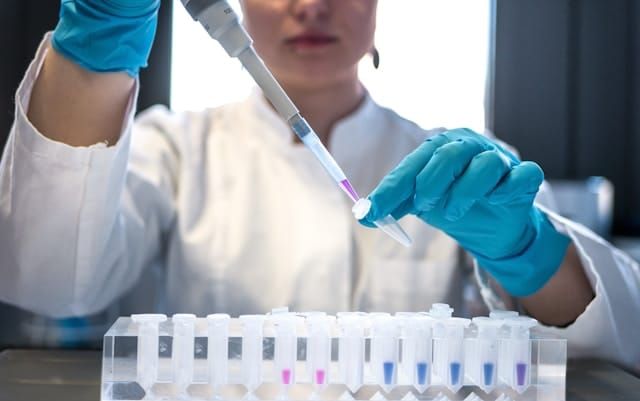
Photo by Julia Koblitz on Unsplash