
The first time a sequencing workflow gives you a bacterial name, it is difficult not to feel that the experiment has reached its conclusion. A sample went into the laboratory, DNA reads came out, and software placed a taxonomic label on the screen. The result looks precise. It may even come with read counts, alignment scores, or percentages.
During my Master’s research, I learned that this is often the point where the real scientific work begins.
My Master’s research, conducted in collaboration with Qatar University’s Biomedical Research Center with scientific and laboratory support, explored whether Oxford Nanopore sequencing of the bacterial 16S rRNA gene could help investigate suspected bloodstream infections in premature infants. We analysed blood specimens from 12 preterm infants, aiming to identify bacterial DNA signals more rapidly and examine what those signals might—and might not—mean alongside conventional clinical assessment.
The work involved extracting DNA from samples with very low microbial biomass, amplifying the 16S marker and analysing sequence-based taxonomic assignments. In that setting, a bacterial name on the screen mattered because an infection in a premature infant is a serious clinical concern. However, a challenge of low-biomass sequencing in any laboratory is that background DNA from reagents, sample handling or the environment can become proportionally important. Sequencing aims to help generate leads for investigation, but it cannot, on its own, establish the presence of a living pathogen or diagnose sepsis.
So the question changed. It was no longer simply, “What organism did the machine detect?” but rather, “What would make me trust that detection?”
A name is not a verdict
Early in research training, we learn how to generate results. We spend much less time learning how to decide how much confidence a result deserves.
Imagine a low-biomass clinical sample being examined for a possible pathogen. Suppose several reads match a bacterial genome. That is a useful first observation, but it does not establish that the organism caused the patient’s condition. The DNA might come from the specimen, a reagent, sample handling, or the laboratory environment. Still, the organism might not be alive, and another explanation might fit the evidence equally well. Even a technically correct sequence match can support the wrong biological story if the context is ignored.
I began to think of a result as the start of a chain rather than the end of one: result → alternative explanations → appropriate controls → independent checks → strength of claim.
Look past the top hit
One of the most useful habits is to stop treating the first line of software output as the whole result.
Depending on the workflow, relevant evidence may include supporting-read counts, alignment length and quality, sequence identity, sequence coverage or classifier-specific confidence scores. Each provides different information about the strength of an identification and should not be taken as a direct probability that a species identification is correct. A high-identity match may still be ambiguous if the same read aligns almost as well to several closely related organisms. What matters is the pattern of competing taxonomic assignments, the discriminatory information in the sequenced region and the quality of the reference set—not a small numerical gap considered in isolation. Full-length gene sequences tend to resolve taxa more reliably than shorter variable regions. However, even full-length sequences may fail to distinguish some closely related species or cases with variable copy numbers of the 16S gene.
When a pipeline does not expose enough detail, representative reads can be checked independently against another curated database or with a sequence-alignment search. The useful question is whether the interpretation survives a reasonable change in reference source and classification method.
That leads to a better question: What makes the top assignment more convincing than the alternatives?
Controls can ruin a beautiful story — and that is their job
In low-biomass sequencing studies, the most informative result may sometimes come from a control that is expected to contain no target DNA.
In low-biomass sequencing studies generally, a bacterial signal detected in an extraction blank or another appropriate negative control can complicate the interpretation of a specimen. Extraction blanks may reveal DNA introduced during extraction, whereas PCR no-template controls and other process controls assess different stages. These safeguards are standard scientific tools used across molecular laboratories worldwide. No single control excludes every source of contamination, and a shared signal does not automatically invalidate a sample result. Instead, it calls for careful evaluation of the competing explanations.
That can feel frustrating when you are new to research. You expect the experiment to produce a clean answer, so a control that complicates the result may initially feel inconvenient.
I eventually learned to see it as an opportunity. Although disappointing, a control that challenges the expected explanation is part of the process. It is doing useful scientific work by showing that the method may require adjustments before competing hypotheses can be explored.
The same logic applies beyond sequencing. In any experiment, a good control helps you distinguish between plausible alternative explanations. It does not exist to decorate the methods section.
Ask what would change your mind
A second habit helped me even more: before deciding that a result is convincing, ask what evidence would make you abandon that interpretation.
For example, an independently extracted aliquot could be tested where material is available, a targeted assay could assess a specific organism, and a separately collected specimen or an orthogonal clinical test might provide complementary evidence. But agreement between two tests is not necessarily independent if they share contamination sources or reference assumptions. Conversely, a clean negative control does not prove that every sample signal is authentic. The useful question is: what result would help distinguish the leading interpretation from the most plausible alternatives?
This question forces a promising result to compete with alternatives. It also makes the next experiment easier to design, because validation is no longer an abstract demand for “more data.” It becomes a specific test based on alternative explanations.
For new researchers, this is an important shift. Scientific judgement is not the ability to sound certain. It is the ability to explain why one interpretation deserves more confidence than another, and what evidence could still overturn it.
The skill is acquired at the moment you most want to believe
I knew, in theory, that contamination existed. I knew that negative controls mattered. I knew that databases had limitations. But knowing these things did not necessarily make me more critical of a result that initially seemed convincing.
That is why I now think scientific judgement is a skill built through deliberate practice, like strengthening a muscle. You build it by repeatedly pausing between observation and interpretation. You compare the strongest explanation with credible alternatives. You ask what each control can —and cannot— exclude, and you become comfortable writing a conclusion narrower than the story you hoped to tell.
The machine is allowed to be right without your conclusion being right
Sequencing instruments and classification software are extraordinarily useful. The lesson is not to distrust them. It is to understand the level at which they are answering your question.
A machine can accurately report that a sequence resembles a reference. That does not automatically establish the biological origin or significance of the sequence. These are different questions, and require additional evidence.
When I look back at my postgraduate research, the most valuable lesson was not learning how to make a bacterial name appear on a screen. It was learning that the appearance of the name is where interpretation starts. A convincing signal should prompt two questions: what evidence would strengthen this explanation, and what evidence would make me change my mind?
The machine gave me an answer. Experience taught me to test the interpretation before accepting the story.
Kasem Jamil Al-Saloumi is a biology educator and scientific research coordinator based in Doha, Qatar. He holds an MSc in Biotechnology (DNA Technology). His postgraduate research, undertaken with support from Qatar University’s Biomedical Research Center, investigated Oxford Nanopore 16S sequencing in low-biomass blood samples from premature infants with suspected infection, with a focus on responsible taxonomic interpretation and methodological safeguards. His interests include scientific reasoning, bioinformatics and the limits of inference from molecular data. Connect with Kasem on LinkedIn.
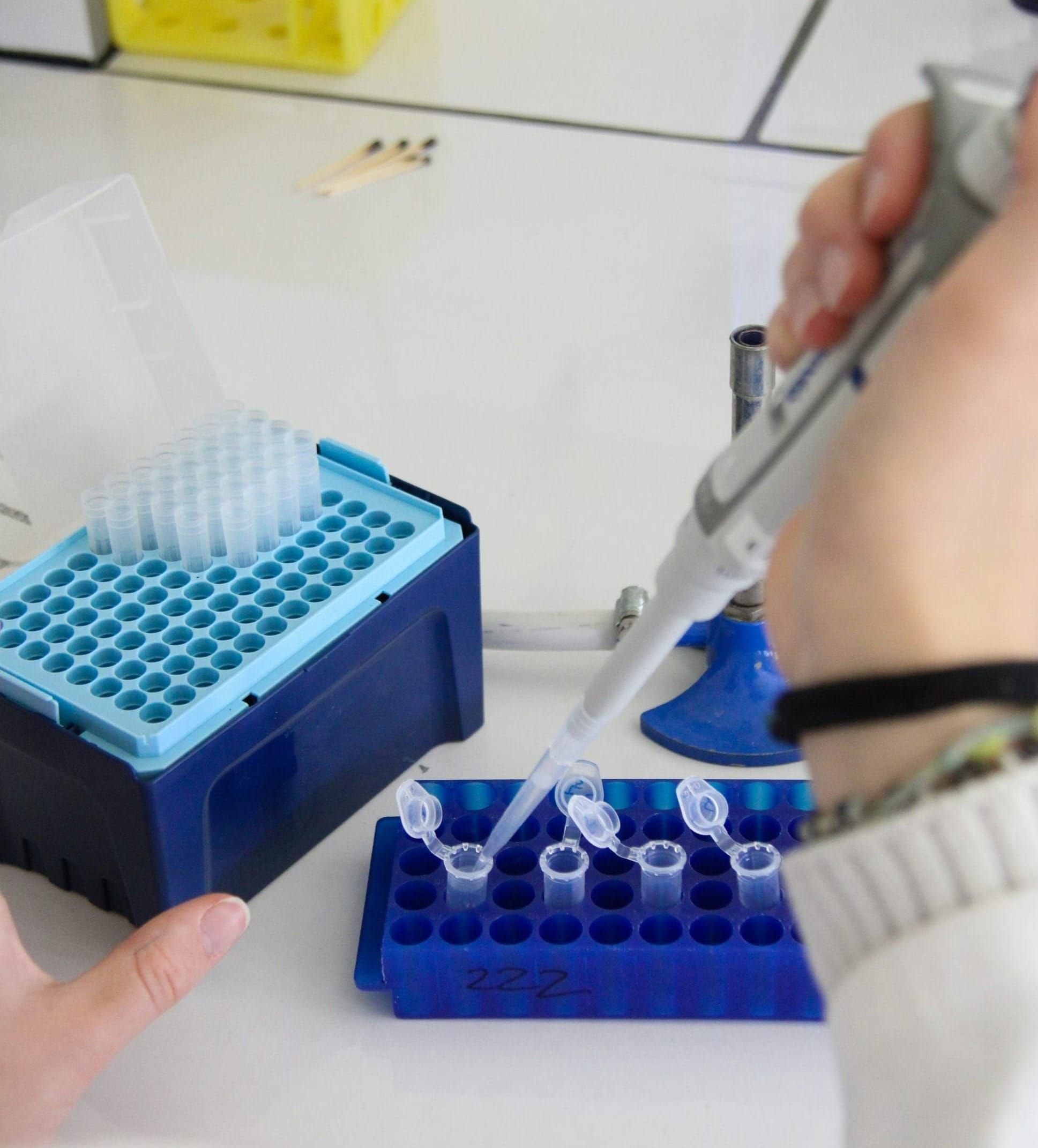
Photo by Nathan Rimoux on Unsplash